Since its inception in 1998, ANTS has been a highly selective, single-track meeting that provided a forum for discussing advances in the field of swarm intelligence. It solicits submissions presenting significant, original research from researchers and practitioners of any area related to swarm intelligence.
Swarm intelligence is an interdisciplinary and rapidly evolving field, rooted in the study of self-organizing processes in both natural and artificial systems. Researchers from disciplines ranging from ethology to statistical physics have developed models that explain collective phenomena, such as decision-making in social insect colonies and collective movements in human crowds. Swarm-inspired algorithms and methods have proven effective in solving complex optimization problems and creating multi-robot and networked systems of unparalleled resilience, adaptability and scalability. Applications of swarm intelligence continue to grow and become increasingly critical for addressing societal challenges such as environmental sustainability, food security, health, and global conflicts.
The 2026 edition’s theme is "reaching beyond - swarm intelligence across systems, disciplines, and communities". The conference seeks to encourage new perspectives, help bridge traditional boundaries and enable open debate on what could be ambitious, exploratory, and groundbreaking endeavors to embark on.
 Call for Papers
The Proceedings are published by Springer-Nature in their Lecture Notes in Computer Science LNCS series.

The journal Swarm Intelligence will publish a special issue dedicated to ANTS 2026 that will contain extended versions of selected research works presented at the conference.
Call for Late Breaking Results & Fresh Perspectives
A list of accepted contributions for the main call is included below.
For accommodation we suggest to book directly at a hotel of your choice. Google Maps can be used to check public transport options to the venue.
We can offer you a discounted rate at the Welcome Hotel using this link.
| Hotel | Hotel Rating | Walking time | Website |
|---|---|---|---|
| Welcome Hotel Darmstadt City Center | ★★★★ | 3 min | welcome-hotels.com |
| THE Darmstadt | ★★★ | 13 min | thehotelexperience.de |
| Felix Hotel Darmstadt | - | 14 min | felix-hotels.de |
| Maritim Hotel Darmstadt | ◉◉◉◉ | 25 min | maritim.de |
| IntercityHotel Darmstadt | ◉◉◉◉ | 28 min | hrewards.com |
| Holiday Inn Express Darmstadt (by IHG) | ★★★ | 34 min | ihg.com |
| Hotel | Distance to venue | Walking time | Website |
|---|---|---|---|
| Best Western Hotel Darmstadt Mitte | ★★★ | 10 min | bestwestern.de |
| Limehome Darmstadt | - | 10 min | limehome.com |
| Hotel Atlanta | ★★★ | 16 min | hotel-atlanta-darmstadt.de |
| H+ Hotel Darmstadt | - | 24 min | h-hotels.com | Dormero Hotel Darmstadt | ◉◉◉◉ | 24 min | dormero.de |
| Plaza Premium Darmstadt | ◉◉◉◉ | 28 min | plazahotels.de |
| Moxy Darmstadt | ◉◉◉ | 29 min | marriott.com |
| B&B Hotel Darmstadt | ◉◉◉ | 30 min | hotel-bb.com |
| Holiday Inn Express Darmstadt (by IHG) | ★★★ | 34 min | ihg.com |
| greet Hotel Darmstadt (Accor) | ★★★ | 40 min | all.accor.com |
Swarms of small drones are promising for many applications, such as search-and-rescue, greenhouse monitoring, or keeping track of stock in warehouses. Since they are small, they can fly in narrow areas. Moreover, their light weight makes them very safe for flight around humans. However, making such tiny drones fly completely by themselves is an enormous challenge. Most approaches to Artificial Intelligence for robotics have been designed with self-driving cars or other large robots in mind – and these are able to carry many sensors and ample processing. In my talk, I will argue that a different approach is necessary for achieving autonomous flight with tiny drones. In particular, I will discuss how we can draw inspiration from flying insects, and endow our drones with similar intelligence. Examples include the fully autonomous “DelFly Explorer”, a 20-gram flapping wing drone, and swarms of CrazyFlie quadrotors of 30 grams able to explore unknown environments and finding gas leaks. Moreover, I will discuss the promises of novel neuromorphic sensing and processing technologies, illustrating this with recent experiments from our lab.
Guido de Croon received his M.Sc. and Ph.D. in the field of Artificial Intelligence (AI) at Maastricht University, the Netherlands. Currently, he is Full Professor at the Micro Air Vehicle lab (MAVLab) of Delft University of Technology. Furthermore, he is editor-in-chief of the Nature portfolio journal of Robotics. His research interest lies with computationally efficient, bio-inspired algorithms for autonomous, light-weight flying robots, with an emphasis on computer vision. His work has included fully autonomous flight of the 20-gram flapping wing drone "DelFly Explorer" and a swarm of tiny, 30-gram nano-copters able to explore unknown environments and localize gas leaks. Moreover, his group has made several advances in energy-efficient, low-latency neuromorphic sensing and processing for autonomous drones. Finally, his work has generated various new hypotheses on biological intelligence, including how honeybees actively evaluate distances with optical flow and how flying insects can estimate their flight attitude without using accelerometers.
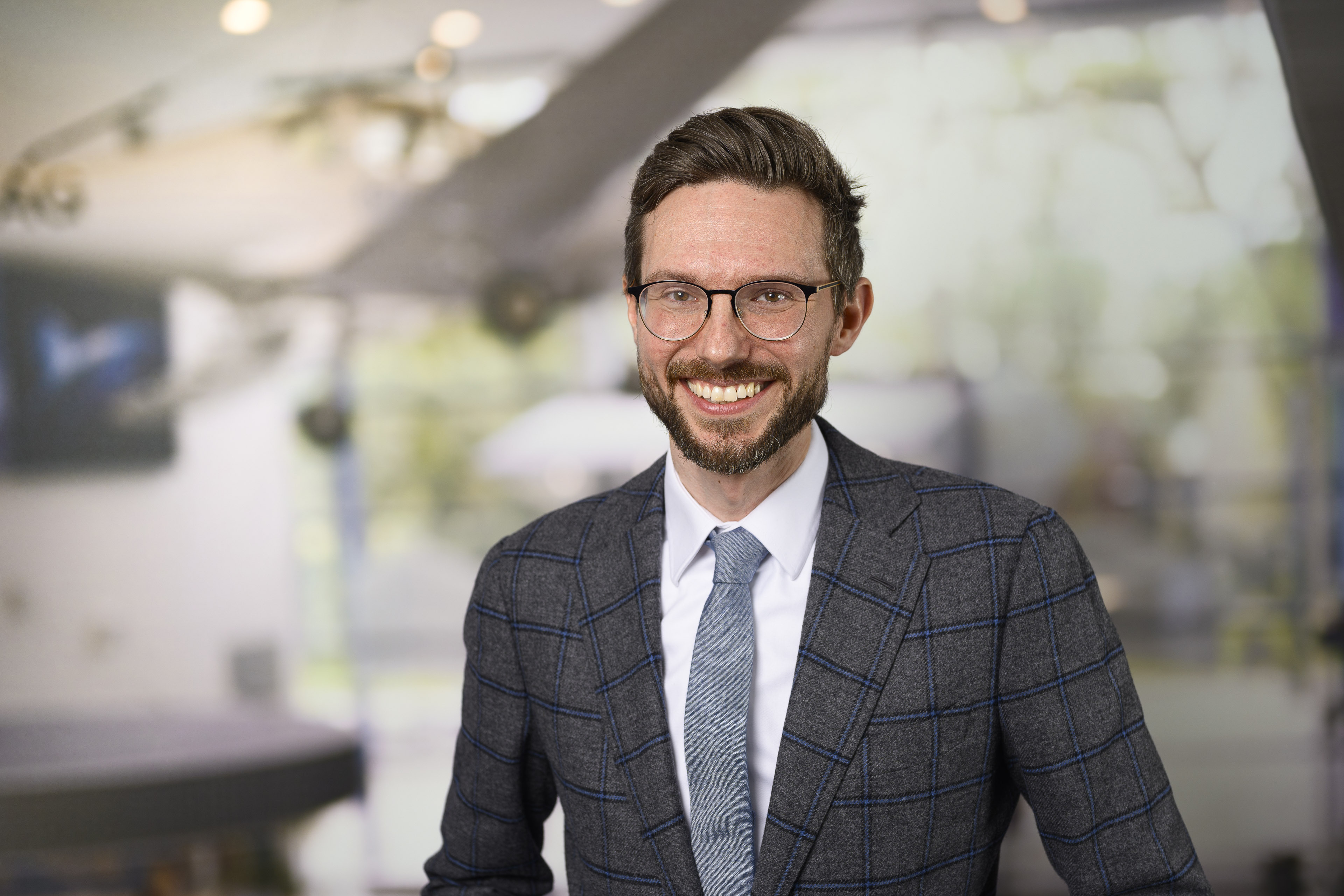
The growing ability to synthesize colloidal nanoparticles of arbitrary shape and interaction anisotropy creates the potential for realizing active complex particle systems with emergent swarm-like behavior that mimics that of microrobotic assemblies and biological systems such as unicellular organisms and tissues. In this talk, we discuss the rise of colloidal robotics and present a complex particle system we call “flexicles” – deformable, artificial cellular superstructures composed of active particles encapsulated by a flexible membrane. We investigate the behavior of single-, multi- and many-flexicle systems, demonstrating how shape deformability of model flexicles gives rise to a diversity of swarming behavior. We show how flexicles are able to navigate through complex environments, accomplish simple tasks, and more. Our findings demonstrate a new, experimentally realizable class of complex particle systems capable of emergent swarm-like behaviors and robotic function.
Sharon C. Glotzer is the John Werner Cahn Distinguished University Professor of Engineering and the Stuart Churchill Collegiate Professor of Chemical Engineering at the University of Michigan, Ann Arbor. She also holds faculty appointments in Materials Science & Engineering, Physics, Applied Physics, and Macromolecular Science and Engineering, and is an elected member of the U.S. National Academy of Sciences, U.S. National Academy of Engineering, American Academy of Arts & Sciences, and the Royal Society of Chemistry in the UK. Her research on computational assembly science and engineering aims toward the predictive design of colloidal and soft matter, with emphasis on complex particles and particle systems. Using simulation, geometrical concepts, and statistical mechanics, her research group seeks to understand the complex behavior emerging from simple rules and forces and to use that knowledge to design new classes of materials. Her work includes control of spatiotemporal organization in soft matter, discovery of one-dimensional dynamical structures in dense atomic, molecular and particulate fluids, and the discovery of high entropy colloidal crystals and quasicrystals for which she introduced the notion of entropic bonding. Glotzer’s “patchy particle” framework for designing and rationalizing assemblies of nanoparticles has been guiding experiments for two decades. Recently, her group introduced the “flexicle” as a conceptual platform for colloidal robotics. Glotzer’s group also develops and disseminates powerful open-source software, including the particle simulation toolkit HOOMD-blue.

In systems composed of many interacting units, the emergence of collective behavior, ranging from epidemic spreading and social contagion to synchronization and cooperation, cannot be understood without explicitly accounting for the patterns of interaction among agents. In this talk, I will present a unifying perspective on how the structure of interactions shapes, constrains, and in some cases determines macroscopic collective dynamics. Starting from basic concepts in complex systems and network theory, I will show how structural properties such as heterogeneity, modularity, and multilayer organization critically affect spreading thresholds, diffusion of information and innovations, synchronization transitions, and the evolutionary dynamics of cooperation. Through these examples I will show common organizing principles underlying seemingly disparate phenomena and provides a coherent basis for addressing contemporary challenges in natural and artificial collective systems, from epidemic mitigation to the design of adaptive and resilient populations of interacting units.
Jesús Gómez-Gardeñes is Full Professor of Condensed Matter Physics at the University of Zaragoza and senior researcher at the Institute for Biocomputation and Physics of Complex Systems (BIFI), where he leads the Group of Theoretical and Applied Modeling (GoThAM Lab). His research is grounded in Statistical and Nonlinear Physics, with a central focus on Network Science and on how macroscopic collective phenomena emerge from microscopic interaction rules. Gómez-Gardeñes has made fundamental contributions to the understanding of the structure and dynamics of complex systems, particularly in congestion phenomena in traffic routing, synchronization transitions, multilayer network dynamics, and evolutionary game theory. A unifying theme of his work is the analysis of how structural organization constraints and shapes functional behavior. His research has received broad international recognition, especially for applications to real-world problems, including large-scale, data-driven modeling of epidemic spreading and the study of cooperation and cultural accumulation in real populations. Methodologically, his work combines analytical approaches, high-performance numerical simulations, and empirical data analysis, allowing him to connect theoretical models with operational tools for realistic scenarios. This integrative perspective is reflected in a prolific publication record in leading journals and a citation impact that positions him as a reference figure in the international complex systems community.
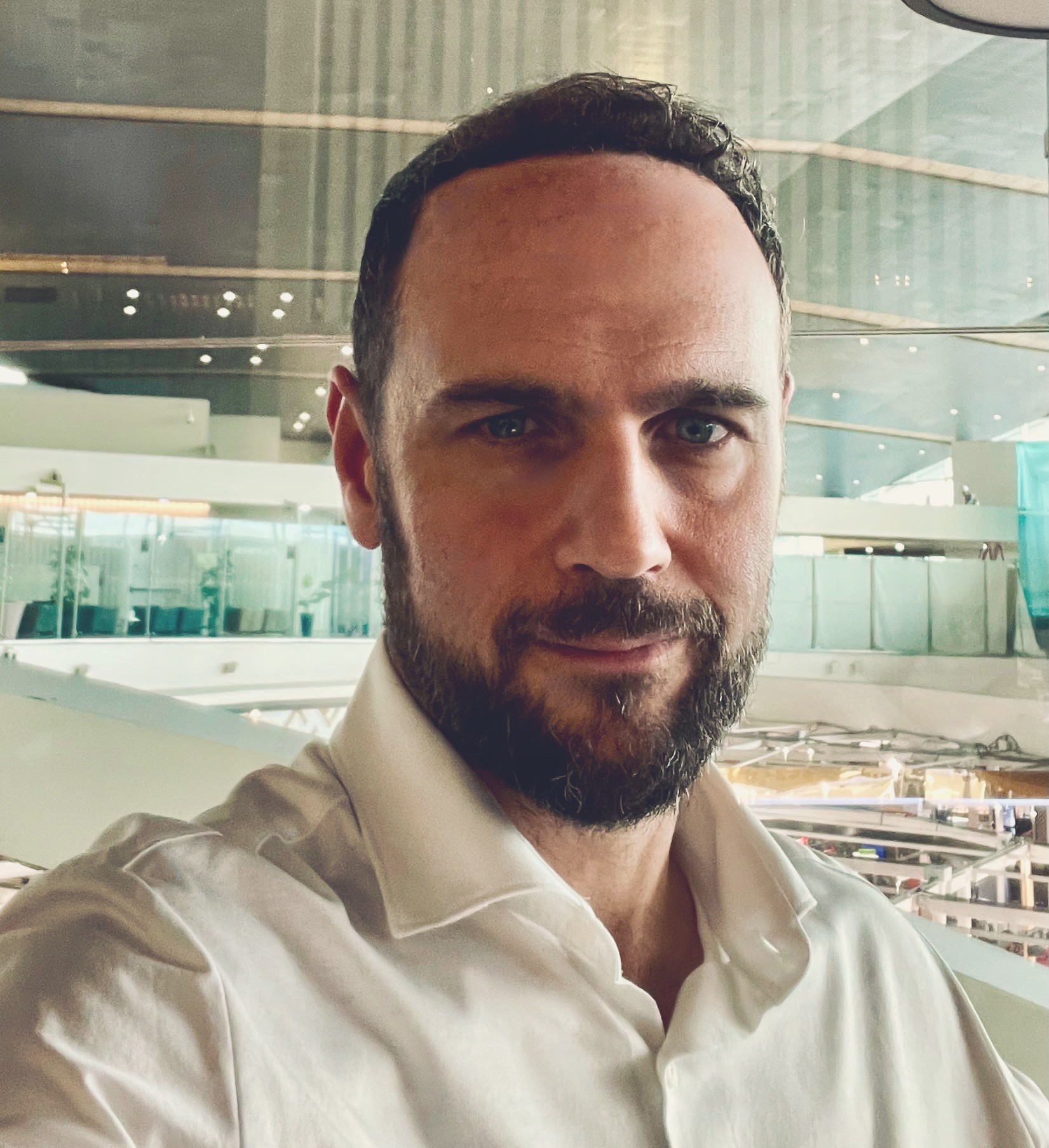
AI agents powered by individuals' data are reshaping everyday interactions on social platforms and marketplaces. At a planetary scale, the aggregation of multi-modal data enables transformative applications such as poverty mapping, socioeconomic predictions, and disaster assessments. However, these advancements also bring systemic risks, including biases, misinformation, and threats to democratic institutions. This talk explores how thoughtful design in database systems and AI can mitigate these challenges, foster sustainable development, and uphold human-centered values. It further advocates for the vigilant oversight of societal-scale AI applications to prevent dual-use and other ethical concerns and instead promote the benefit for humanity. I will also discuss my journey through my research on misinformation, as well as my life as a data scientist, based on my experiences collaborating with world-class scientists at Meta, AT&T Research, and Microsoft, as well as NGOs such as the United Nations Pulse Lab and the World Customs Organization.
Meeyoung (Mia) Cha is a pioneering researcher at the intersection of AI, data science, and computational social science. As a Scientific Director at the Max Planck Institute for Security and Privacy (MPI-SP) and Professor at KAIST, she has established a global benchmark for applying computational rigor to humanitarian challenges. Her research spans from the field’s earliest million-scale rumor propagation models to the deployment of high-resolution satellite imagery for global poverty mapping and anti-corruption. These transformative frameworks are utilized by international bodies like UNICEF and the World Customs Organization to ensure economic transparency. An ACM Distinguished Member and recipient of multiple Test-of-Time Awards, Prof. Cha is a frequent contributor to global policy forums, including UNODC, APEC, and the AI Action Summit. Her career exemplifies a profound commitment to engineering human-centric technology that secures the ethical and social future of global society.

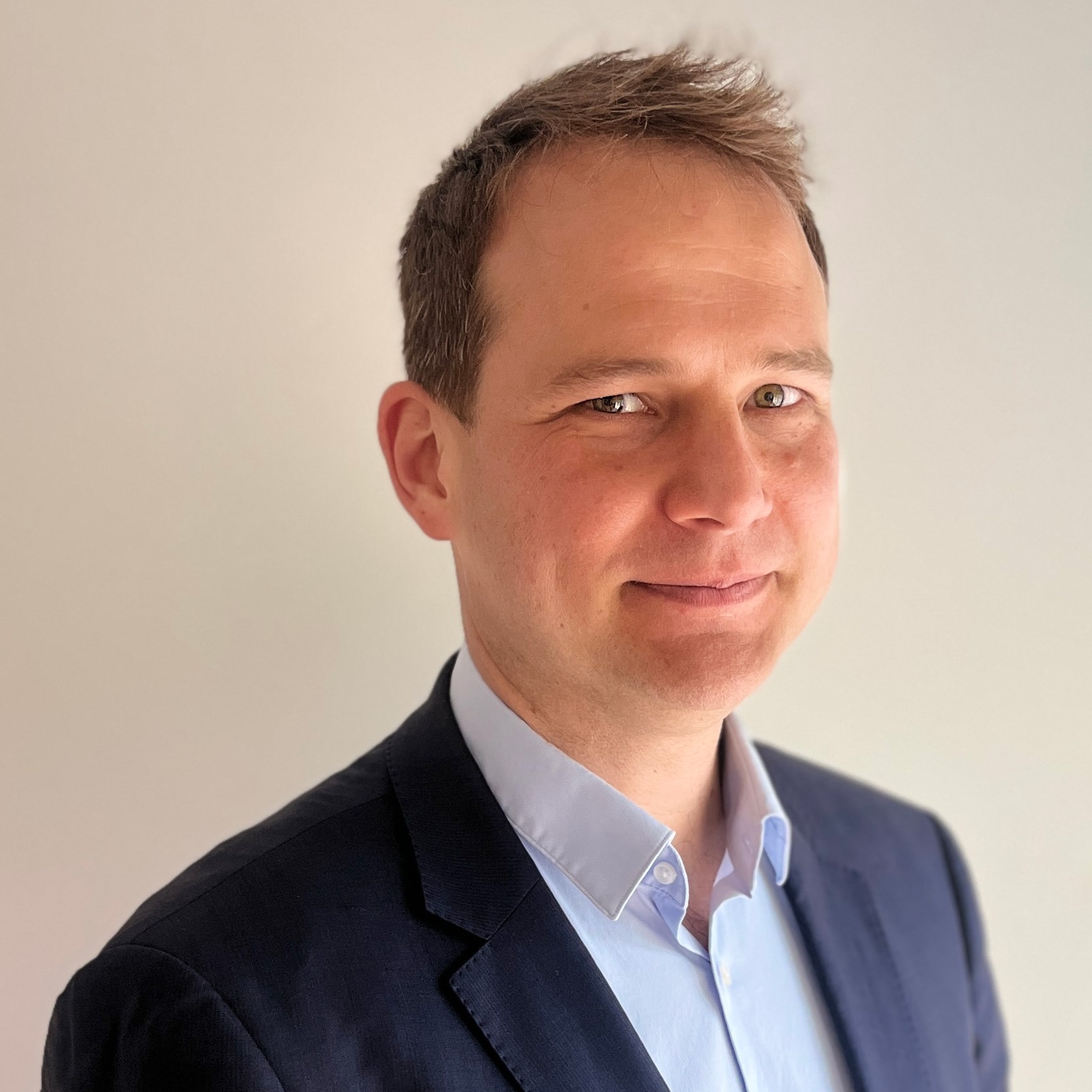
Communication between robots is the heart of swarm robotics. It is communication that enables robots to carry out a task jointly, coordinate their movement, and share the status of the expedition. My name is Thomas Watteyne; my background is in low-power wireless communications. While I have been working mostly on applications with static networks (typically critical industrial use cases), I’ve been looking at swarm robotics since 2022, and want to share my perspective. I believe communication is the next frontier for swarm robotics research and development. I organize my remarks in two parts. First, I will survey the state of the art in low-power wireless, and networking in swarm robotics. While in smaller swarm testbed setups, communication between robots can be emulated by using WiFi or simple optical communication, these solutions don’t translate well in real-world scenarios in which robots are far apart, and where there is no infrastructure. I will survey different networking paradigms, including mesh networking and time synchronized channel hopping. Together, we will define an architecture and possible avenues for future swarm networking solutions. Second, I will focus on the need for hands-on swarm experimentation platforms with a focus on wireless. Together with collaborators from Horizon Europe OpenSwarm consortium, Analog Devices and Inria have been designing, building and installing a testbed of 1,000 swarm robots called “DotBots”. Two DotBot testbed are running: at Analog Devices in Ireland, and at Inria in France. We will delve into the platform’s multi-gateway wireless orchestration infrastructure that uses a novel Time Synchronized Channel Hopping network over BLE, and offers roaming, scalability to 1,000 nodes, and 250 ms round-trip latency. Throughout the talk, we will be driving robots in the room, allow you to program them, and we will connect remotely to the testbeds in France and Ireland. So bring your laptop and be ready for an interactive and hands-on session!
Thomas Watteyne is an insatiable enthusiast of embedded technologies. He is a Principal Engineer at Analog Devices, in Boston. He is currently on a sabbatical from a Senior Research Director position at Inria in Paris in the AIO research team, working on robotic swarms and low-power wireless. In 2023-2024, Thomas served as the scientific coordinator of the Horizon Europe OpenSwarm project. Between 2013 and 2022, Thomas cochaired the IETF 6TiSCH working group to standardize how to use IEEE802.15.4e TSCH in IPv6-enabled mesh networks. He was a postdoctoral research lead in Prof. Kristofer Pister’s team at the University of California, Berkeley. Between 2005 and 2008, he was a research engineer at France Telecom, Orange Labs. He holds a PhD in Computer Science (2008), an MSc in Networking (2005) and an MEng in Telecommunications (2005) from INSA Lyon, France. He is a Senior member of IEEE. He is fluent in 4 languages.
Geovane Fedrecheski is a research engineer at the AIO team of the French National Institute for Research in Digital Science and Technology (Inria) in Paris. He holds a Bachelor’s degree in Computer Science (UNICENTRO) and a PhD in Electrical Engineering (USP), and was a visitor scholar at UC Berkeley. He has developed mobile, web, and IoT systems, worked at LG Electronics, and taught MOOCs. He contributes to global IoT security standards at IETF and developed the Micro-robot Access Radio Infrastructure (Mari). At Inria, he currently leads the development of the OpenSwarm Testbed, an open and scalable platform for swarm robotics research and education.

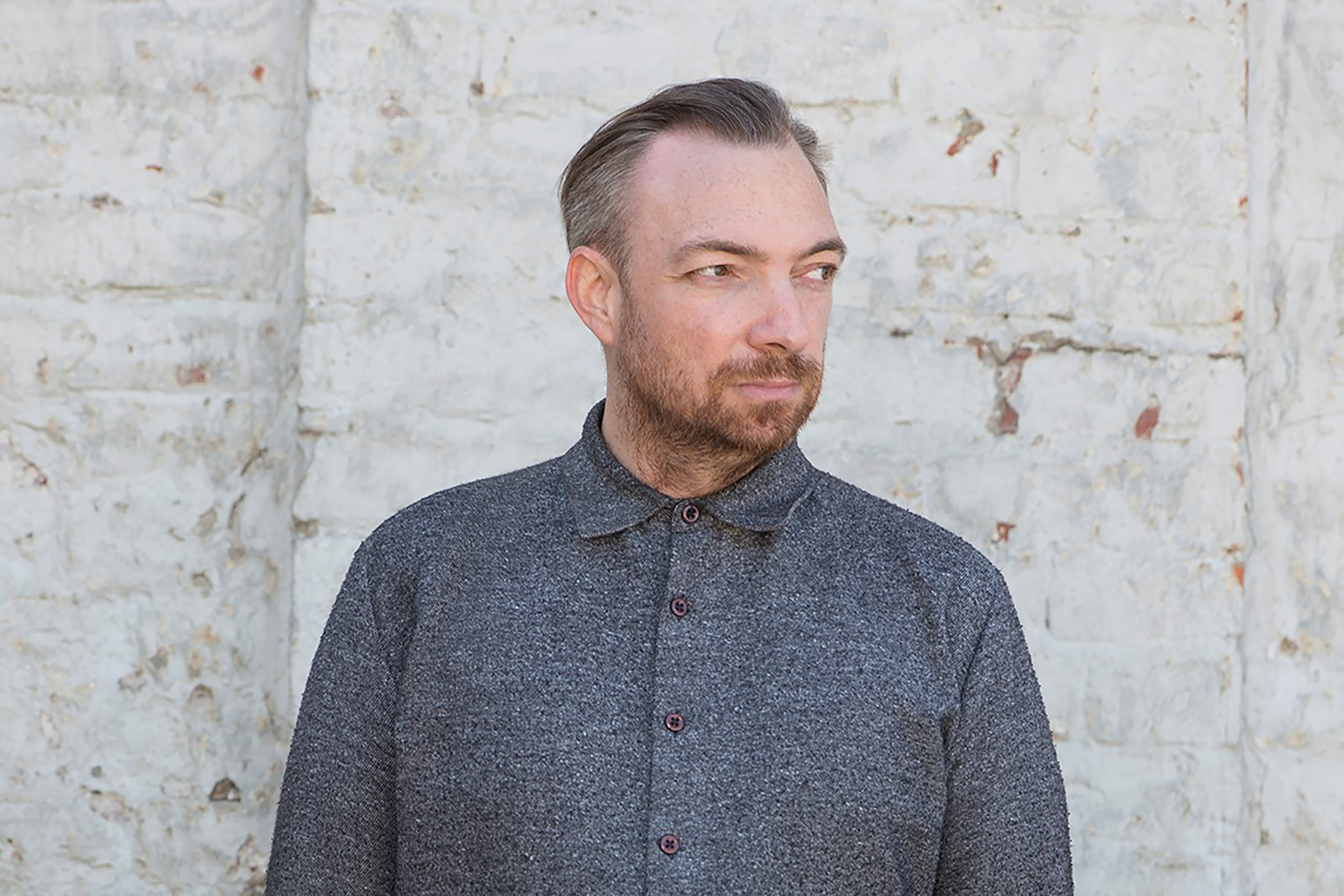
Following centuries of colonisation, globalisation, and never-ending economic extraction, we have remade the world from the scale of the cell to the tectonic plate. The dystopias of science fiction that previously read as speculative cautionary tales are now the stage sets of the everyday as many of us live out our lives in a disaster film playing in real-time. In this seemingly futureless moment, the storytelling performance 'Planetary Imaginaries' will take us on a sci-fi safari through a screenscape of alternative and hopeful worlds. Slipping between fiction and documentary, the journey will be both an extraordinary image of tomorrow and an urgent illumination of the environmental questions that are facing us today.
Liam Young is a designer, director and BAFTA nominated producer renowned for his innovative work at the intersection of design, fiction, and futures. Described by the BBC as ‘the man designing our futures’, his visionary films and speculative worlds are both extraordinary images of tomorrow and urgent examinations of the environmental questions facing us today. As a worldbuilder he visualizes the cities, spaces and props of our imaginary futures for the film and television industry and with his own films he has premiered with platforms ranging from Channel 4, Apple+, SxSW, Tribeca, the New York Metropolitan Museum, The Royal Academy, Venice Biennale, the BBC and the Guardian. His films have been collected internationally by museums such as MoMA New York, the Art Institute of Chicago, SF MoMA, The Smithsonian, the Victoria and Albert Museum, the National Gallery of Victoria and M Plus Hong Kong and has been acclaimed in both mainstream and design media including features with TED, Wired, New Scientist, Arte, Canal+, Time magazine and many more. His film work is informed by his academic research and has held guest professorships at Princeton University, MIT, and Cambridge and now runs the ground breaking Masters in Fiction and Entertainment at SCI Arc in Los Angeles. He has published several books including the recent Machine Landscapes: Architectures of the Post Anthropocene and Planet City, a story of a fictional city for the entire population of the earth.
Find everything you need to know about the ANTS conference in our Conference Guidebook.
| 08:00 | Registration Opens |
| 08:45 | Opening Remarks |
| 09:00 | Keynote Jesús Gómez-Gardeñes From Interaction Structure to Collective Dynamics |
| 10:00 | Coffee Break |
| 10:30 | Oral Session 1 |
| 12:06 | Lunch and Late-Breaking Result Posters |
| 13:20 | Oral Session 2 |
| 14:50 | Coffee Break |
| 15:20 | Perspective Talk Meeyoung Cha AI, Society, and Computing: Leveraging Global Data While Tackling Ethical Challenges |
| 15:50 | Poster Teasers 1 |
| 16:00 | Poster & Demo Session |
| 17:00 | End of Program |
| 17:30 | Art Tours of Mathildenhöhe and Haus Glückert |
| 08:00 | Registration Opens |
| 09:00 | Keynote Sharon Glotzer Towards Colloidal Swarm Robots |
| 10:00 | Coffee Break |
| 10:30 | Oral Session 3 |
| 12:00 | Lunch and Late-Breaking Result Posters |
| 13:20 | Oral Session 4 |
| 14:50 | Group Photo and Coffee Break |
| 15:20 | Perspective Talk Thomas Watteyne Swarm Robotics: A Low-Power Wireless Perspective |
| 15:50 | Oral Session 5 |
| 16:15 | Poster Teasers 2 |
| 16:20 | Announcing ANTS 2028 (moderated by Marco Dorigo) |
| 16:40 | Poster & Demo Session |
| 17:40 | End of Program |
| 19:00 | Banquet at Restaurant Glasschrank |
| 08:00 | Registration Opens |
| 09:00 | Keynote Guido de Croon Swarms of Small, Autonomous Drones |
| 10:00 | Coffee Break |
| 10:30 | Oral Session 6 |
| 12:00 | Lunch and Late-Breaking Result Posters |
| 13:20 | Oral Session 7 |
| 14:50 | Coffee Break |
| 15:20 | Perspective Talk Liam Young New Planetary Imageries |
| 15:50 | Poster Teasers 3 |
| 16:00 | Poster & Demo Session |
| 17:00 | Award Ceremony |
| 17:30 | Closing Remarks |
| 17:40 | End of Program |
| 10:30 | ROS-2-ARGoS bridge: Scalable simulations of swarms of 1000 and more robots Sindiso Mkhatshwa, Tianfu Zhang, Paolo Leopardi, Heiko Hamann, and Andreagiovanni Reina |
| 10:48 | Bigraphical model checking for coordinated drone landings on vertiports Dominik Grzelak, Tianxiong Zhang, and Uwe Aßmann |
| 11:06 | Mitigating latency and partitioning through size regulation in blockchain-enabled robot swarms Raina Zakir, Marco Dorigo, and Volker Strobel |
| 11:24 | A fast distributed algorithm for breakage detection in modular robots Ikrame Yazidi, Lucas Berthome, Morvan Ouisse, and Benoit Piranda |
| 11:42 | Lightning Talk: Leadership emergence in a drum circle setting Sara Delplanque, Seyed Ehsan Marjani Bajestani, Nicholas Foster, Caroline Traube, Floris van Vugt, Simone Dalla Bella, Giovanni Beltrame |
| 11:48 | Lightning Talk: How social contagions shape collective consensus Mohammad Savari, Nikolaj Horsevad, Robert E. Kooij, Mohammadreza Chamanbaz, Didier Wernli, Roland Bouffanais |
| 11:54 | Lightning Talk: Psychological Needs Shape Human Social Cooperation Chen Chen, Liang Li, Fadong Chen, Mohammad Salahshour, Xiangyi Li Richter |
| 12:00 | Lightning Talk: Magnetically controlled collective motion in compliant butterfly structures Muhammad Bilal Khan, Kilian Schäfer, Florian Hofmann, Matthias Lutzi, Eduardo Sergio Oliveros-Mata, Oleksandr Pylypovskyi, Denys Makarov, Oliver Gutfleisch |
| 13:20 | Emergent in-group bias: Sociality and individuation in robotic swarms Roman Miletitch and Limor Raviv |
| 13:38 | Decoding spatial and temporal influence in collective behavior using information theory Udoy S. Basak, Sulimon Sattari, Iacopo Hachen, Iain D. Couzin, and Liang Li |
| 13:56 | AID: Agent intent from diffusion for multi-agent informative path planning Jeric Lew, Yuhong Cao, Derek Ming Siang Tan, and Guillaume Sartoretti |
| 14:14 | Re-solving the shepherding problem: Lead when possible, herd when necessary Daniel Strömbom, Julianna Hoitt, and Cameron Cloud |
| 14:20 | From pheromones to policies: Reinforcement learning for engineered biological swarm Aymeric Vellinger, Nemanja Antonic, and Elio Tuci |
| 14:26 | GMM-PACO: Gaussian mixture models and pareto-based ant colony optimization for multi-objective feature selection Anna Krysta, Inès Alaya, and Tristan Cazenave |
| 14:32 | FDA flocking: Future direction-aware flocking via velocity prediction Hossein B. Jond and Martin Saska |
| 14:38 | Distributed analytic center selection for resilient control of multi-robot systems with imperfect communication channels Gennaro Notomista |
| 14:44 | Escaping the trap: Benchmarking swarm gradient-following in geometrically constrained environments Kian Andrew Busico, Lilly Schwarzenbach, Fares Abu-Dakka, and Eliseo Ferrante |
| 15:50 | Swarm vs. swarm behaviour via multi-objective multi-agent reinforcement learning Sune S. Nielsen, Negin Mohammadi, Tanaz Ghahremani, and Grégoire Danoy |
| 15:52 | Environmental perception in a swarm of conversational agents Absera Yihunie, Lilly Schwarzenbach, Hanan Salam, and Eliseo Ferrante |
| 15:54 | A Gaussian bounded confidence model for resisting misinformation in swarm robotics Yuxuan Yuan, Paul O’Dowd, and Jonathan Lawry |
| 15:56 | Minimizing uncertainty as a principle for task allocation in robot swarms Yannick Wesseloh, Paolo Leopardi, Jonas Kuckling, and Heiko Hamann |
| 15:58 | Experimentally validated distributional modelling and control for passive swarm robots Seth Lim, Yuanbo Nie, Mohamed S. Talamali, Roderich Groß, and Visakan Kadirkamanathan |
| 10:30 | Convergence and running time of time-dependent ant colony algorithms Bodo Manthey, Jesse van Rhijn, Ashkan Safari, and Tjark Vredeveld |
| 10:48 | Tumblenauts: Towards a bacteria-inspired robot swarm for intra-vehicular space inspection Sneha Ramshanker, Merihan Alhafnawi, Yushra Guffer, and Radhika Nagpal |
| 11:06 | Closing the loop between BEECLUST and honeybee thermotaxis Martin Stefanec, Alexander Herlitz, Daniel Reisinger, Johannes Diebold, Daniel Nicolas Hofstadler, Anna Reichenpfader, Laurenz Alexander Fedotoff, Farshad Arvin, Ronald Thenius, and Thomas Schmickl |
| 11:24 | Multi-agent reinforcement learning of a fault-robust controller in an intralogistics robot swarm Youssef Alboraei, Sabine Hauert, and Suet Lee |
| 11:42 | Lightning Talk: SWARMUSE: Operationalizing Embodied Music Pedagogy through Swarm Intelligence Luc Nijs |
| 11:48 | Lightning Talk: Swarm organization: A framework for implementing multi-agent systems Lena Fahry |
| 11:54 | Lightning Talk: From Individual Balance Control to Collective Dynamics in Ultra-Dense Crowds Antoine Tordeux, Thomas Chatagnon, Mohcine Chraibi |
| 13:20 | Distributed multi-coverage for robot swarms Mariem Guitouni and Aaron T. Becker |
| 13:38 | Marine surface vehicle formations in confined environments Chanaka Thushitha Bandara and Herbert G. Tanner |
| 13:56 | Ten years of the collective perception benchmark in swarm robotics: Achievements and challenges Heiko Hamann and Andreagiovanni Reina |
| 14:14 | User-centred design of multi-UAV swarm interfaces for firefighting UAVs Alexander McConville, Georgios Tzoumas, Lucio R. Salinas, Marcela Munera, and Sabine Hauert |
| 14:20 | When small differences matter: How small differences create leaders in flocking swarms Yara Khaluf |
| 14:26 | Modeling information propagation in robot swarms through epidemiological models Giuseppe A. Patarino, Volker Strobel, Himank Gupta, and Marco Dorigo |
| 14:32 | Online self-calibration of robotic swarm motility phases via social learning with fast transmission Leo Cazenille, Salman Houdaibi, and Nicolas Bredeche |
| 14:38 | How swarms differ: Challenges in collective behaviour comparison André Fialho Jesus and Jonas Kuckling |
| 14:44 | Group Photo |
| 15:50 | Decentralized multi-robot coverage of hemispherical surfaces via fortune-based partitioning Mehdi Belal, Tiziano Manoni, Dario Albani, and Lorenzo Sabattini |
| 15:56 | FORMICA: Decision-focused learning for communication-free multi-robot task allocation Antonio Lopez, Jack Muirhead, and Carlo Pinciroli |
| 16:02 | Adaptive multi-robot herding via dynamic risk-aware angular repositioning Leyre Remartinez, Alejandro Perez-Yus, and Rosario Aragues |
| 16:08 | Split over n resource sharing problem: are fewer capable agents better than many simpler ones? Karthik Soma, Mohamed S. Talamali, Genki Miyauchi, Giovanni Beltrame, Heiko Hamann, and Roderich Groß |
| 16:14 | MagBotSim: Physics-based simulation and reinforcement learning environments for magnetic robotics Lara Bergmann, Cedric Grothues, and Klaus Neumann |
| 16:16 | Development of an integrated swarm robotics platform with real-time human-based guidance Rugved Upaddhye, Akshat Singh, Swadhin Agrawal, and Sujit P.B. |
| 16:18 | Fission-fusion processes for regulation of group size and number in multi-agent systems Tianfu Zhang, Suet Lee, and Heiko Hamann |
| 10:30 | Energy-efficient flocking in self-organized robot swarms Sina Mahdavi, Dushyant Singh, Peter Klapwijk, Georges Jetti, Michael Khayyat, Francesco Braghin, and Eliseo Ferrante |
| 10:48 | A social interaction model for forager task allocation in honey bees Atakan Botasun, Babür Erdem, Elvin Gültekinoğlu, Ali Emre Turgut, and Erol Şahin |
| 11:06 | Plyo: AI-assisted lightning-fast communication for robot swarms Martina Balbi, Lance Doherty, and Thomas Watteyne |
| 11:24 | Distributed MPC for connectivity-constrained fixed-wing aerial swarms Yacine Derder, Augustin Desombre, İzzet Kağan Erünsal, and Alcherio Martinoli |
| 11:42 | Lightning Talk: A mechanical route for cooperative transport in autonomous robotic swarms Eden Arbel, Luco Buise, Charlotte van Waes, Naomi Oppenheimer, Yoav Lahini, Matan Yah Ben Zion |
| 11:48 | Lightning Talk: SwarmMAP: Decentralized cell type annotation in single cell sequencing data Oliver Lester Saldanha, Else Kroener, Vivien Goepp, Kevin Pfeiffer, Hyojin Kim, Rafael Kramann, Sikander Hayat, Jakob Nikolas Kather |
| 11:54 | Lightning Talk: Fluid Fleets: Applying Swarm Intelligence to Public Transit Lindsay Burke, Maxfield Comstock, Jason Graham, Petras Swissler, Simon Garnier |
| 13:20 | A micro-macro model of encounter-driven information diffusion in robot swarms Davis S. Catherman and Carlo Pinciroli |
| 13:38 | Warmth and competence in the swarm: Designing effective human-robot teams Genki Miyauchi, Roderich Groß, and Chaona Chen |
| 13:56 | Multi-robot visibility-based connected exploration Chetan Gadidesi, Sean Klink, and Aaron T. Becker |
| 14:14 | Scalable foraging: A paired body design and controller for foraging robots Andrew Vardy and Marius Seidl |
| 14:20 | Heterogeneous visco-elastic cyber-physical swarm exploration algorithm in an unknown environment Fatemeh Rekabi Bana, Mazen Bahaidarah, and Farshad Arvin |
| 14:26 | Active elastic matter: 3D collective motion for swarms Ersin Keskin, Ali Emre Turgut, and Erol Şahin |
| 14:32 | Swarming from vision data only: A comparative study of imitation and reinforcement learning Yu Zhou, Jo Plested, Kathryn Kasmarik, and Matt Garratt |
| 14:38 | On the cost of evolving task specialization in multi-robot systems Paolo Leopardi, Heiko Hamann, Jonas Kuckling, and Tanja Katharina Kaiser |
| 14:44 | Knowledge distillation-driven federated learning as a service for resource-constrained edge intelligence Filippo Vannella, Tianyue Chu, David Solans Noguero, and Sotirios Spantideas |
| 15:50 | SonoRo: A swarm robotics platform to study acoustically-driven collective behaviour Alberto Doimo, Heiko Hamann, Andreagiovanni Reina, and Thejasvi Beleyur |
| 15:52 | Knowledge distillation for developing versatile controllers of robotic swarms Asad Razzaq and Toshiyuki Yasuda |
| 15:54 | Trust and perception of robot swarm motion in remote contexts Yue Cao, Razanne Abu-Aisheh, Shyamli Suneesh, and Sabine Hauert |
| 15:56 | Grid-based complete resource foraging for robot swarms Arturo Gonzalez and Qi Lu |
| 15:58 | Cooperative energy-replenishment in robot swarms with optimal performance and efficiency Julian Rau, Mohamed S. Talamali, Genki Miyauchi, Usama Ali, Mengyao Liu, Danny Hughes, Thomas Watteyne, and Roderich Groß |
| Category | Price |
|---|---|
The conference fee includes:
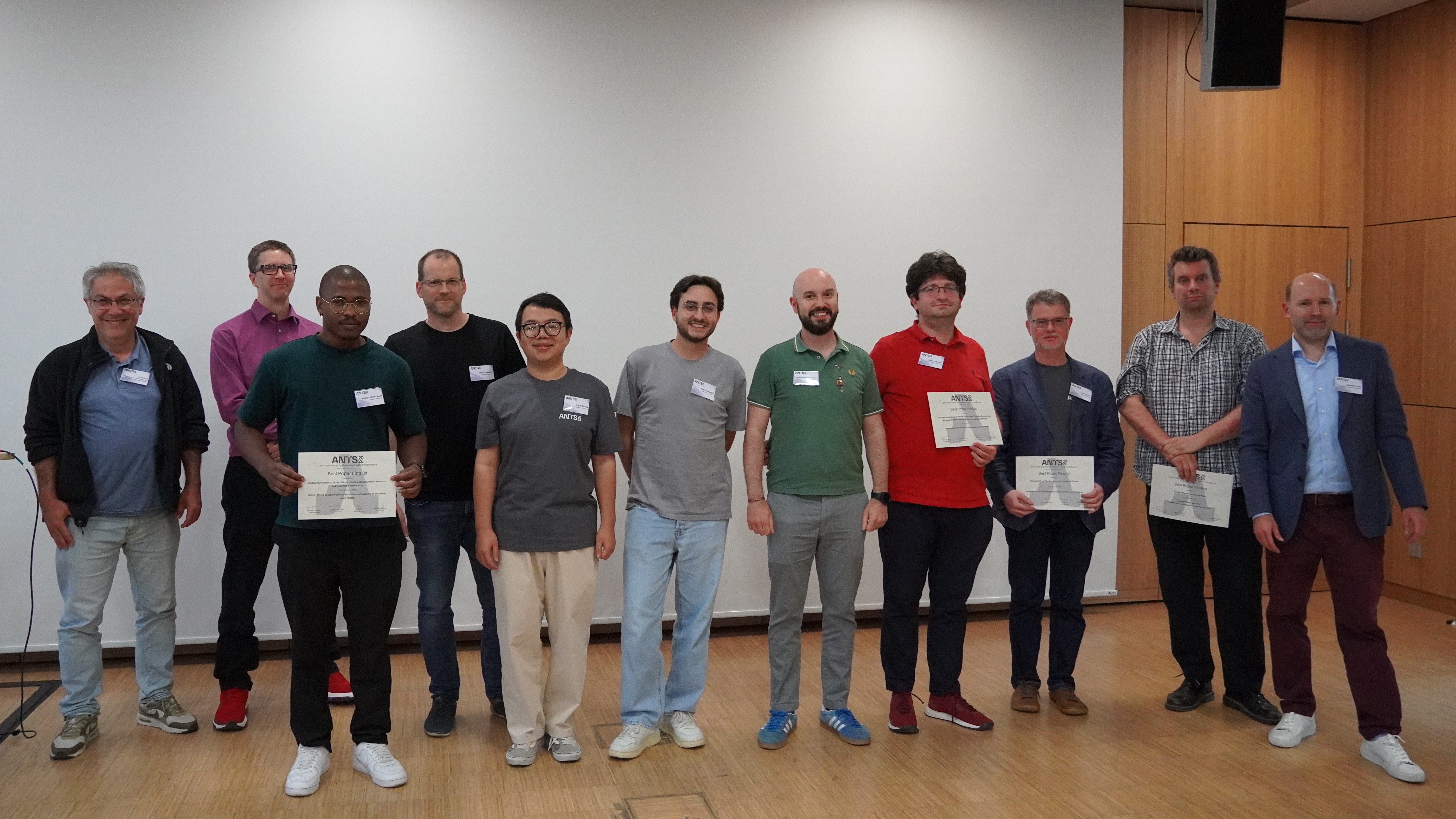
Continuing with a tradition started at ANTS 2002, the "Best Paper Award" at ANTS 2026 consists of a sculpture of an ant specially made for the ANTS conference series by the Italian sculptor Matteo Pugliese.

The selection was made by the award committee (Aaron T. Becker, Bahar Haghighat and Erol Sahin) during the conference taking into account the quality of the published manuscript and oral presentation.
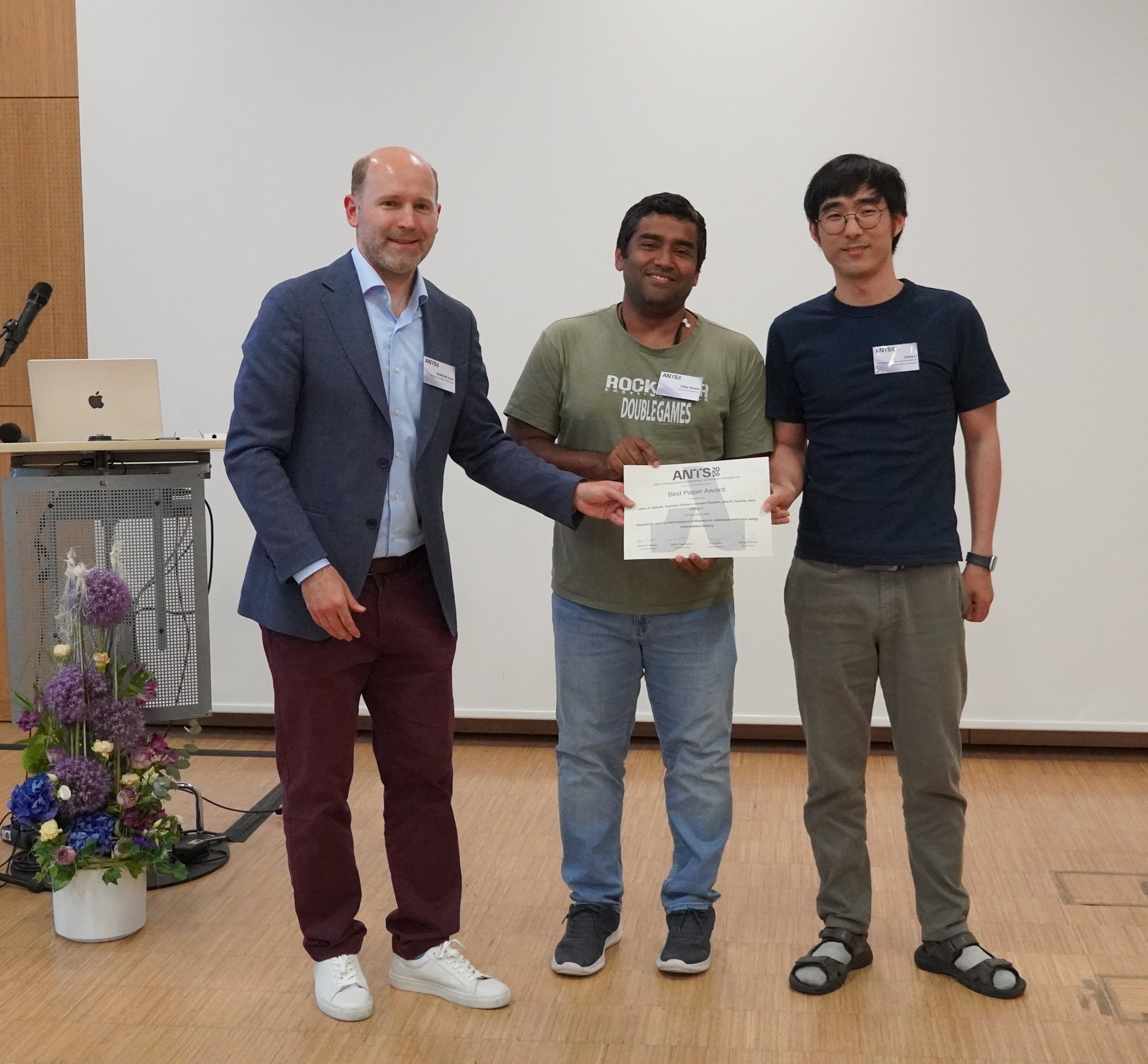
The winner of the ANTS 2026 Best Paper Award is
Decoding spatial and temporal influence in collective behavior using information theory,
Udoy S. Basak, Sulimon Sattari, Iacopo Hachen, Iain D. Couzin, and Liang Li.
Supplementary video files were peer-reviewed alongside the regular submissions they complement. Up to four Best Video Awards (EUR 250 each) sponsored by Springer Nature recognize outstanding submissions. The winners are:
Each day, attendees voted for the best poster
Submissions may be a maximum of 11 pages, excluding references, when typeset in the Springer Lecture Notes in Computer Science (LNCS) LaTeX template. Submissions should be a minimum of 7 full pages.
This strict page limit includes figures, tables, and all supplementary sections (e.g., Acknowledgements). The only exclusion from the page limit is the reference list, which should be of any length suitable to adequately position the paper with respect to the state of the art.
Papers should be prepared in English, in the Springer LNCS LaTeX style, using the default font and font size. Authors should consult Springer’s authors’ guidelines and use their proceedings template for LaTeX, for the preparation of their papers. Please download the Proceedings (LNCS) LaTex template package (zip, 318 kB) and authors' guidelines (pdf, 244 kB) directly from the Springer website.
All submissions will undergo single-blind peer review, that is, they should include author names and affiliations.
Submissions that do not respect these guidelines will not be considered.
Note: Authors may find it convenient that Springer LNCS LaTex templates are available in Overleaf.
The initial submission must be in PDF format.
All submissions must comply with Springer Nature’s Book Authors’ Code of Conduct.
Please note that in the camera-ready phase, authors of accepted papers will need to submit both a compiled PDF and all source files (including LaTeX files and figures).
The camera-ready phase will have more detailed formatting requirements than the initial submission phase.
Springer offers authors the option of including videos in their proceedings papers. You may (optionally) upload a supplementary video file (only MP4 format, maximum duration of 180 seconds, maximum file size of 50 MB, resolution 16:9). Please note that a video that was NOT submitted with the initial submission of an ANTS paper, will NOT be accepted at a later date. Authors must not violate privacy and confidentiality rules and, as always, permission must be sought for use of third-party content.
The paper submission system closes at 23:59:59 (AoE) on 20 November 2025.
Submitted papers will be peer-reviewed on the basis of relevance, originality, technical quality, significance, and presentation quality (see Review Form). If a submission is not accepted as a full length paper, it may still be accepted either as a short paper or as an extended abstract. In such cases, authors will be asked to reduce the length of the submission accordingly. Authors of all accepted papers will be asked to execute revisions, based on the reviewers’ comments.
Accepted papers are to be revised and submitted as a camera-ready version. Reviewers’ comments should be taken into account and should guide appropriate revisions.
By submitting a camera-ready paper, the author(s) agree that at least one author will attend the conference and give a presentation of the paper. At least one author must be registered by the deadline for camera-ready submissions.
Camera-ready submission deadline: February 13, 2026, 23:59:59 (AoE).
Papers must be prepared using the LNCS Springer LaTeX template provided by Springer and must follow the LNCS default formatting (font, font size, margins, and spacing). Authors should consult Springer’s authors’ guidelines when formatting their paper.
The LaTeX class and reference style files included in the template:
llncs.clssplncs04.bstare already correctly configured and must not be modified under any circumstances.
These page limits include figures, tables, and all supplementary sections (e.g. Acknowledgements). The only exclusion from these page limits is the reference list, which should have an appropriate length with respect to the state of the art.
All page limits refer to papers prepared using the LNCS Springer LaTeX template.
Authors should ensure that their manuscript respects the following rules.
The following LNCS template options are mandatory.
The running header must be enabled. This is done by starting the document with:
\documentclass[runningheads]{llncs}In the \authorrunning{} field:
If the paper title is too long for the running header, specify a shortened version using:
\titlerunning{Abbreviated paper title}\newline in the title\orcidID{} within the \author{} fieldAffiliations must include:
Do not include street addresses or ZIP/postal codes.
The corresponding author’s email address is mandatory.
After the \institute{} entries, include an \index{} entry for each author, giving the surname, followed by the full first name(s). For example:
\index{SurnameAuthor1, FirstnameAuthor1}\index{SurnameAuthor2, FirstnameAuthor2}\index{SurnameAuthor3, FirstnameAuthor3}\subsubsection{Acknowledgements}).Authors must include a Disclosure of Interests statement in their manuscript, in accordance with Springer’s author guidelines.
The disclosure-of-interests statement should be:
\subsubsection{Disclosure of Interests}),If the authors have no competing interests to declare, the statement should explicitly say so.
Examples:
For contributions accepted as Extended Abstracts:
Do not add formatting modifications to the main document (.tex) to override the template defaults (e.g. margins, line spacing, or font sizes). In particular:
\vspace{}, \\*[0pt])subcaption package, as it overrides the default caption formatting in the template).During the final preparation of the proceedings, Springer will recompile all papers using their original LNCS class files. Any formatting modifications that do not comply with the template may be removed, potentially affecting the paper length. Papers that do not compile correctly or do not follow the required format cannot be included in the proceedings.
Figures should be provided in their original vector format (.pdf, .eps) wherever applicable. If raster graphics are used (.png, .jpeg, .tiff, .bmp), they must be high resolution at the final printed size:
Although figures in the digital proceedings will appear in full color, the printed proceedings will be produced in grayscale. Authors must ensure that all figures remain clearly legible when printed in grayscale.
References must be formatted using the LNCS reference style splncs04.bst. In-text citations appear as numbers, and the numbered reference list is ordered alphabetically.
Ensure your manuscript includes the following lines (uncommented) in the appropriate place:
\bibliographystyle{splncs04}\bibliography{mybibliography}Authors must not change the bibliography style.
Authors must create their own .bib file and populate it with their references. By default, the template uses mybibliography.bib; authors should either name their file mybibliography.bib or update the filename in the \bibliography{...} command accordingly, while keeping the bibliography style unchanged.
The .bbl file must be generated and included in the camera-ready submission archive.
Springer encourages authors to include their ORCIDs in their papers. In addition, the corresponding author, acting on behalf of all authors, must complete and sign the Consent-to-Publish form.
Once the camera-ready files have been sent to Springer, changes relating to the authorship of the papers can no longer be made.
Before proceeding with submission, authors must complete the Camera-Ready Author Checklist. The checklist serves as a self-verification that all formatting, file, and submission requirements have been satisfied. The completed checklist must be submitted as a PDF and included in the camera-ready submission archive.
Failure to complete and submit the checklist may result in exclusion from the conference proceedings.
Upload the video as part of your camera-ready submission archive. File: MP4 only; max duration: 180 seconds; max size: 50 MB; format: 16:9. Authors must not violate privacy or confidentiality rules and must obtain permission for any third-party content.
For Springer Nature to publish your supplementary video file two conditions must be met:
Your camera-ready submission must be uploaded as a single compressed archive (.zip or .tgz). The maximum archive size is 100 MB.
Authors must remove any files that are not used in the compilation of the manuscript, including (but not limited to) previous versions of figures, backup copies of the manuscript, commented-out source files, or auxiliary material not required for compilation.
The submission archive must include:
.pdf),.tex),.bib and .bbl),.pdf, .eps, .png, .jpeg, .tiff, .bmp),.pdf),.mp4), if accepted via the decision email.Camera-ready submissions that do not comply with all requirements may be excluded from the conference proceedings.
After preparing your camera-ready manuscript and submission archive as described above, submit your files via EasyChair by following these steps:
.zip or .tgz) by clicking on Choose file.Camera-ready submission deadline: February 13, 2026, 23:59:59 (AoE).
You must fill in and sign the Springer copyright form. The form should be emailed to ants2026@rcps.tu-darmstadt.de with the subject:
"Copyright form paper <paper number> - <last name of first author>"
Please make sure to include the following information in the completed form:
The following includes instructions for you to prepare the presentations for your contribution. The ANTS logo is included here if you wish to use it in posters (download print version) or presentation slides (download digital version).
Accepted full papers (main call) are presented as full-length talks (15 mins plus 3 mins for questions). Accepted short papers (main call) are presented as short talks (5 mins plus 1 min for questions). Contributions accepted as lightning talks (late breaking results & fresh perspectives call) are presented as short talks (5 mins plus 1 min for questions). A computer running PowerPoint and Acrobat Reader will be available for your presentation. You can use this computer for your presentation or bring your own device. Contributions presented orally will also be presented during the poster session on the same day of the presentation. Please refer to the on-line program for details.
All accepted contributions (including late breaking results & fresh perspectives call) are presented as posters (please refer to the online program for details):
(i) Posters of late-breaking results and fresh perspectives (including those selected for lightning talks) are presented in the poster session with lunch starting at noon. They can be set up from 8:00 am and must be removed by 1:20 pm.
(ii) Posters of contributions accepted as full papers, short papers and extended abstracts (standard call) are presented in the late afternoon poster sessions. Then can be set up from 1:20 pm and must be removed by 6:00 pm.
Posters should be of size A0 portrait. There is no standard template, every author shall choose what best fits their work. Material to fix the posters to the stands will be provided.
Contributions accepted as extended abstracts (only for main call) will be introduced in the Poster teaser sessions. You will present a 2 minute highlight (with no questions), using a SINGLE slide. This slide must be sent to ants2026@rcps.tu-darmstadt.de at least 24 hours before your presentation. We will take care of projecting the poster teasers. It is not possible to use your own device.
The Proceedings are published by Springer-Nature in their Lecture Notes in Computer Science (LNCS) series.
The journal Swarm Intelligence will publish a special issue dedicated to ANTS 2026 that will contain extended versions of selected research works presented at the conference.